

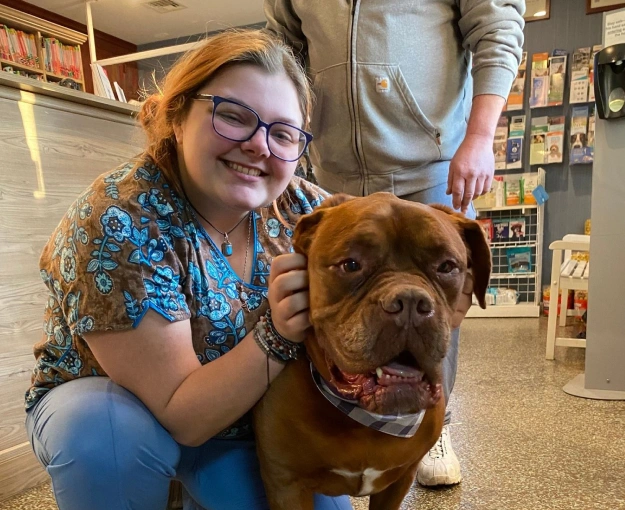
Senior Pet Care for Your Aging Companion
Pets age similarly to humans, but they do so at a much faster rate. By age 7, most dogs and cats are considered seniors, and they have unique health needs that we can help you manage with our senior pet care expertise at Paumanok Veterinary Hospital.
Caring for Your Senior Dog
Senior pets require specialized care to support their health and longevity. We recommend semi-annual visits for geriatric patients to closely monitor any health changes, such as weight loss, heart and lung issues, dental disease, cataracts, glaucoma, arthritis, and cancer. Regular check-ups help keep your pet happy and healthy by addressing and preventing conditions before they develop.
- One human year is roughly equivalent to 5-7 dog years! Health changes can happen quickly, sometimes within just 3-6 months.
- Most dogs are considered seniors at age 7, while larger breeds are considered senior at 5 years old.
- Dental disease is common in senior dogs. Inflamed gums and teeth can cause significant pain, infection, tooth loss, and even contribute to kidney and heart disease.
- Just like human seniors, older pets benefit from health screenings such as blood tests, urinalysis, fecal exams, radiographs, and ultrasounds.
- Nutritional needs change with age. Older dogs often consume fewer calories and exercise less. Protein malnutrition can contribute to 50-70% of kidney and liver disorders. Obesity is a major health risk, leading to conditions like arthritis, diabetes, and heart or respiratory issues.
- Behavior changes are typical in senior pets. You may notice signs like disorientation, increased sleeping, less interaction, or house training issues. These behaviors can often be addressed with modern therapies.
Caring for Your Senior Cat
- Cats are generally considered seniors by age 8.
- One human year equals approximately 5-7 cat years, and significant health changes can occur within just 3-6 months.
- Dental disease is common in senior cats. Inflamed gums and teeth can be painful, leading to infection, tooth loss, bad breath, and contributing to kidney and heart disease.
- Just like humans, senior cats benefit from health screenings, including blood tests, urinalysis, fecal exams, radiographs, and ultrasounds.
- Older cats often require changes in their diet. They typically consume fewer calories and exercise less. Protein malnutrition is linked to 50-70% of kidney and liver disorders, while obesity can lead to conditions such as arthritis, diabetes, and cardiovascular, respiratory, and musculoskeletal issues.
- Behavior changes are normal in senior cats. They may appear disoriented, sleep more, interact less, or forget their housetraining. These changes can often be managed with new therapies.
