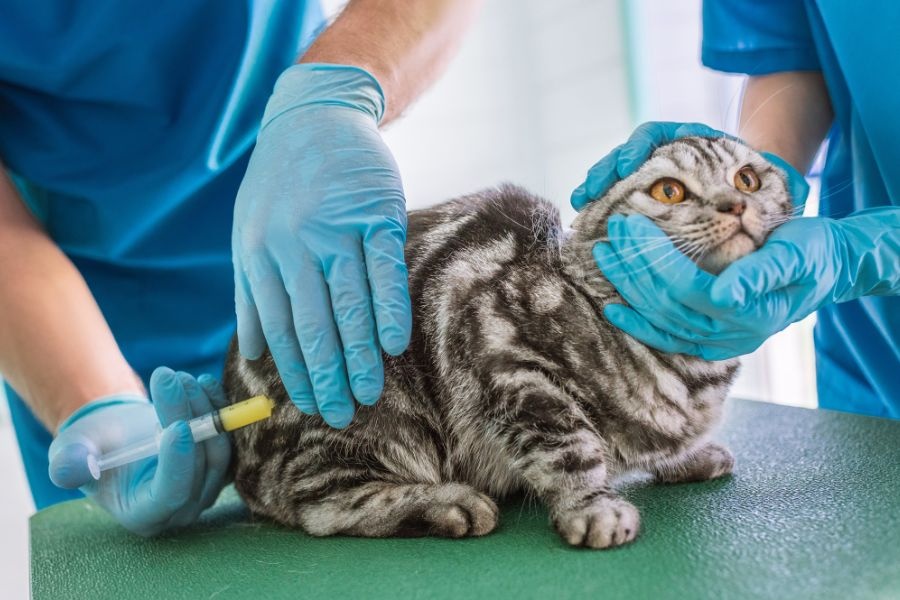
Every pet owner on Long Island wants to do right by their dog or cat. But walk into any vet’s office, and you may feel overwhelmed by the vaccine options on the table. Understanding core vs non-core vaccines is one of the most important things you can do for your pet’s health. Core vaccines protect against diseases that are widespread, serious, and often fatal. Non-core vaccines address risks that vary by lifestyle, environment, and exposure. Both categories matter, but not every pet needs every vaccine. This guide breaks it down in plain language so you can have a confident, informed conversation with your veterinarian. Your pet deserves protection that fits their life.
What Are Core Vaccines and Why Do Pets Need Them?
Core vaccines are recommended for every dog and cat, regardless of lifestyle. These vaccines protect against diseases so contagious or deadly that no pet should go without them.
For dogs, core vaccines include rabies, distemper, parvovirus, and adenovirus. These are typically combined into one shot known as the DA2PP or DHPP. Rabies is legally required for dogs in New York State. The other core vaccines protect against illnesses that spread easily and kill quickly, especially in puppies.
For cats, core vaccines include rabies, feline panleukopenia (feline distemper), feline herpesvirus, and feline calicivirus. The last three are often given together as the FVRCP combo shot. Even indoor cats need these vaccines. Viruses can travel on clothing, shoes, and air.
The American Veterinary Medical Association (AVMA) recommends core vaccines as the baseline standard of care for all dogs and cats. In our experience, the pets we see come in most critically ill are often those that missed their core vaccine series early in life.
What Are Non-Core Vaccines and Which Pets Need Them?
Non-core vaccines are optional but often strongly recommended based on your pet’s specific risk factors. These vaccines protect against real diseases. They simply are not universally necessary for every animal.
For dogs, common non-core vaccines include:
- Bordetella (kennel cough): Recommended for dogs that visit dog parks, boarding facilities, grooming salons, or daycare. It spreads through the air in shared spaces.
- Leptospirosis: Important for dogs exposed to standing water, wildlife, or rural environments. Leptospirosis is a bacterial infection that can also infect humans.
- Lyme disease: Highly relevant in Suffolk County, where ticks are abundant. Dogs that spend time outdoors in wooded or grassy areas benefit from this vaccine.
- Canine influenza: Recommended for dogs that frequently interact with other dogs in group settings.
For cats, non-core vaccines include feline leukemia virus (FeLV) and feline immunodeficiency virus (FIV). FeLV is strongly recommended for cats that go outdoors or live with other cats of unknown status.
Pet owners often tell us they didn’t realize their dog needed a Lyme vaccine because they “only walk in the neighborhood.” On Long Island, that is often enough exposure to warrant it. Your vet will assess your pet’s actual lifestyle, not just assumptions.
What to Expect at Paumanok Veterinary Hospital
Getting your pet vaccinated at Paumanok Veterinary Hospital is simple and stress-free. Here is what the process looks like:
- Schedule a wellness exam. All vaccines are given during or after a physical exam. Your vet checks your overall health before administering any shots.
- Review your pet’s history. Bring any previous vaccine records. Your vet will identify what is current, what is overdue, and what is newly appropriate.
- Discuss lifestyle factors. Your vet will ask about boarding, dog parks, outdoor access, and travel. This shapes which non-core vaccines make sense.
- Receive vaccines and documentation. Your pet gets vaccinated, and you leave with an updated record. Rabies certificates are provided for legal compliance.
- Set reminders for boosters. Some vaccines require annual renewal. Others last two to three years. Your vet will build a schedule that fits your pet’s needs.
Our vet team in Patchogue takes time to explain every vaccine before it is given. No pressure, no guessing. Just clear guidance based on your specific pet.
How a Pet Vaccine Schedule Keeps Your Pet Protected Year-Round
A consistent pet vaccine schedule and vet visit is the backbone of preventive care. Vaccines do not work as a one-time fix. Immunity fades over time, and boosters are what keep protection strong.
Puppies and kittens need a series of vaccines starting at 6 to 8 weeks of age. These early shots build the foundation of their immune system. Gaps in this series can leave them vulnerable. Required dog vaccinations for puppies typically follow a schedule at 8, 12, and 16 weeks, with a rabies shot added around 12 to 16 weeks.
Adult pets need regular wellness exams to stay on track. The AAHA (American Animal Hospital Association) publishes vaccination guidelines that vets use to determine appropriate timing for each vaccine. Many pet owners mistakenly believe that once a pet is vaccinated as a puppy or kitten, they are protected for life. That is not accurate. Boosters matter.
We frequently remind our clients that an out-of-date vaccine is not just a technicality. It is a real gap in protection, especially for diseases like parvovirus that survive in soil and environments for months.
Vaccine Guidance for Puppies and Kittens: What New Pet Parents Should Know
A solid puppy kitten vaccine guide starts with one truth: the earlier you start, the better protected your pet will be. Young animals are most vulnerable to infectious disease because their immune systems are still developing.
For puppies, the core series begins at 6 to 8 weeks and continues every three to four weeks until 16 weeks of age. Non-core vaccines like Bordetella may start earlier if the puppy will be socialized in group settings. Cat vaccines: what to expect: kittens follow a similar schedule, with the FVRCP series beginning at 6 to 8 weeks and FeLV recommended based on outdoor access.
An estimated 1 in 4 unvaccinated puppies exposed to parvovirus will die, even with treatment. That statistic stops most new pet owners in their tracks. Vaccinating early is one of the most powerful things you can do.
New pet parents often feel overwhelmed by the schedule. It helps to think of it as four or five short visits spread over a few months, not a complicated long-term commitment.
Conclusion
Knowing the difference between core and non-core vaccines helps you make smarter decisions for your dog or cat. Core vaccines are non-negotiable for every pet. Non-core vaccines are a personalized layer of protection based on lifestyle, environment, and risk. On Long Island, factors like tick exposure, wildlife, and active social lives for pets make several non-core vaccines genuinely important. The best approach is always an honest conversation with your veterinarian about how your pet actually lives. Every pet’s needs are different, and vaccine plans should reflect that. At Paumanok Veterinary Hospital, we are here to guide you through every decision with clarity and care. Book an appointment today.
Frequently Asked Questions
Are core vaccines required by law for pets in New York?
Ans: Rabies vaccination is required by law for dogs in New York State. Cats are also required to be vaccinated against rabies under New York State Public Health Law. Other core vaccines are not legally mandated but are strongly recommended by the AVMA and AAHA for every pet’s health and safety.
How do I know which non-core vaccines my dog needs?
Ans: Your veterinarian will assess your dog’s lifestyle during a wellness exam. Factors like dog park visits, boarding, hiking, and tick exposure all influence which non-core vaccines are appropriate. There is no single answer that fits every dog. A personalized review is the only accurate approach.
Can I spread out my puppy’s vaccines to reduce stress?
Ans: Some adjustment in timing is possible, but gaps between core vaccines in the puppy series can leave young pets vulnerable to serious illness. Talk to your vet before changing the recommended schedule. In most cases, the standard timing is designed to match your puppy’s immune development.
Are there risks or side effects from pet vaccines?
Ans: Most pets experience little to no side effects. Mild soreness at the injection site or temporary fatigue is normal. Serious reactions are rare. If your pet shows facial swelling, vomiting, or difficulty breathing within an hour of vaccination, contact your vet immediately.
How often does my adult cat need vaccines?
Ans: It depends on the vaccine. Rabies may be given every one or three years, depending on the product used. FVRCP is typically boostered every three years for adult indoor cats. Outdoor cats or those with higher exposure may need more frequent protection. Your vet will build a schedule based on your cat’s age, health, and lifestyle.