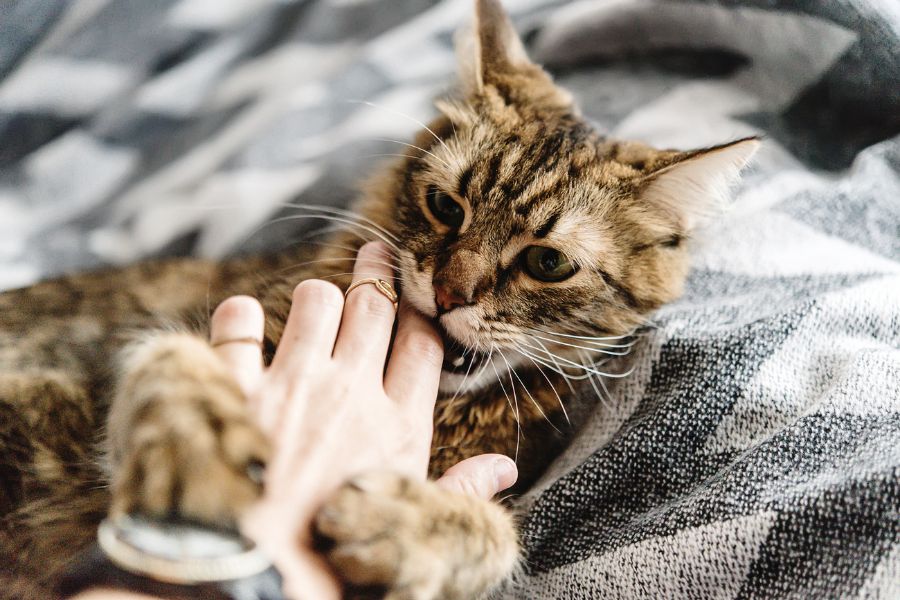
If your cat suddenly bites you, it can feel confusing, even hurtful. Cats bite their owners for a variety of reasons, and understanding these behaviors is key to building a healthier bond with your pet. In this guide, we’ll break down the most common causes behind feline biting, what each behavior means, and how you can respond effectively. Whether you’re dealing with playful nips or aggressive bites, learning about understanding cat biting behavior will help you keep both you and your cat safe.
Why Do Cats Bite Their Owners?
Cats communicate very differently from humans. While dogs may bark or wag their tails, cats rely heavily on subtle body language—and sometimes biting—to express themselves.
Understanding cat biting means looking at the context, your cat’s mood, and their environment. Not all bites are aggressive. Some are playful, while others signal discomfort, fear, or overstimulation.
Here are the five most common reasons why cats bite their owners.
1. Play Aggression – When Fun Turns Rough
One of the most common reasons cats bite is during play. Kittens, in particular, learn hunting skills by pouncing, scratching, and biting.
Signs of Play Biting:
- Dilated pupils
- Tail flicking quickly
- Pouncing or stalking behavior
- Light to moderate bites without hissing
Young cats often don’t realize how hard they’re biting, especially if they didn’t learn proper boundaries from littermates.
What It Means:
This type of cat biting behavior is not meant to harm—it’s instinctive. Your cat sees your hands or feet as prey.
What You Can Do:
- Use toys instead of your hands
- Avoid rough play
- Redirect their energy with interactive toys
2. Overstimulation
Cats enjoy affection, but only up to a point. Petting your cat for too long can lead to overstimulation, causing them to bite as a warning.
Signs of Overstimulation:
- Tail twitching or thumping
- Ears turning sideways or backward
- Sudden tension in the body
- Skin rippling along the back
What It Means:
Your cat is telling you to stop. This is a clear example of understanding cat biting behavior as communication rather than aggression.
What You Can Do:
- Pay attention to early warning signs
- Keep petting sessions short
- Let your cat initiate contact
3. Fear or Anxiety – Defensive Biting
If your cat feels threatened, they may bite to protect themselves. This is especially common in new environments or around unfamiliar people.
Common Triggers:
- Loud noises
- Sudden movements
- New pets or visitors
- Vet visits or grooming
Signs of Fear:
- Hissing or growling
- Flattened ears
- Arched back
- Attempting to hide
What It Means:
These cat bites their owners are defensive, not aggressive. Your cat is acting out of fear.
What You Can Do:
- Create a calm, safe environment
- Avoid forcing interaction
- Give your cat space to retreat
4. Redirected Aggression – Taking It Out on You
Sometimes, your cat may be upset by something they can’t reach—like another animal outside—and redirect that frustration toward you.
Example Scenario:
Your cat sees a bird through the window but can’t reach it. When you try to pet them, they bite instead.
Signs of Redirected Aggression:
- Suddenly, intense biting
- Agitated pacing
- Fixation on something outside
What It Means:
This type of cat biting means your cat is overwhelmed and displacing their frustration.
What You Can Do:
- Avoid touching your cat when they’re agitated
- Remove the trigger if possible
- Provide enrichment like window perches or toys
5. Medical Issues – Pain-Related Biting
If your cat suddenly starts biting without a clear reason, it could be due to pain or an underlying health problem.
Possible Medical Causes:
- Dental disease
- Arthritis
- Injuries
- Skin conditions
Warning Signs:
- Sudden change in behavior
- Sensitivity to touch
- Reduced activity
- Loss of appetite
What It Means:
Pain can make even the friendliest cat lash out. This is a critical aspect of understanding cat biting behavior; sometimes it’s not behavioral at all.
What You Can Do:
- Schedule a veterinary checkup
- Monitor for other symptoms
- Avoid touching sensitive areas
If your cat’s behavior changes suddenly, a professional evaluation at your nearest veterinary hospital can help rule out medical issues and ensure your pet’s well-being.
How to Prevent Cat Biting
Preventing bites starts with understanding your cat’s needs and respecting their boundaries.
Practical Tips:
- Learn body language: Cats give warning signs before biting
- Use positive reinforcement: Reward calm behavior
- Avoid punishment: This increases fear and aggression
- Provide enrichment: Toys, scratching posts, and playtime reduce frustration
- Stick to routines: Cats thrive on consistency
Consistency and patience are key when managing cat bites to their owners.
When Should You Be Concerned About Cat Bites?
Not all bites are equal. Some require immediate attention.
Seek Help If:
- The bite breaks the skin
- Your cat shows repeated aggressive behavior
- There are signs of infection (redness, swelling)
- Behavior changes suddenly
Cat bites can lead to infections in humans, so proper wound care is essential.
Conclusion
Understanding why cats bite their owners is the first step toward improving your relationship with your feline companion. From playful nips to fear-based reactions, each bite has a meaning. By learning the signals and responding appropriately, you can prevent unwanted behavior and create a safer, more trusting environment for your cat.
If you are a cat parent in the Patchogue area and your cat’s biting becomes frequent or unusual, don’t ignore it. Veterinary guidance can make all the difference. Book an appointment at Paumanok Veterinary Hospital today to ensure your cat’s behavior and health are on the right track.
FAQs
Q1: Why does my cat bite me gently while purring?
Ans: Gentle bites during purring often mean affection or play. This type of cat biting behavior is usually harmless and similar to grooming or love bites.
Q2: How can I stop my cat from biting my hands?
Ans: Avoid using hands during play and switch to toys. Consistent redirection helps reduce cat bites to their owners over time.
Q3: Are cat bites dangerous to humans?
Ans: Yes, cat bites can cause bacterial infections. Clean wounds immediately and seek medical care if swelling or redness develops.
Q4: Why does my cat bite me when I pet them?
Ans: This is usually due to overstimulation. Understanding cat biting behavior helps you recognize when your cat has had enough.
Q5: Should I punish my cat for biting?
Ans: No, punishment can increase fear and aggression. Instead, focus on positive reinforcement and understanding what triggers the biting behavior.