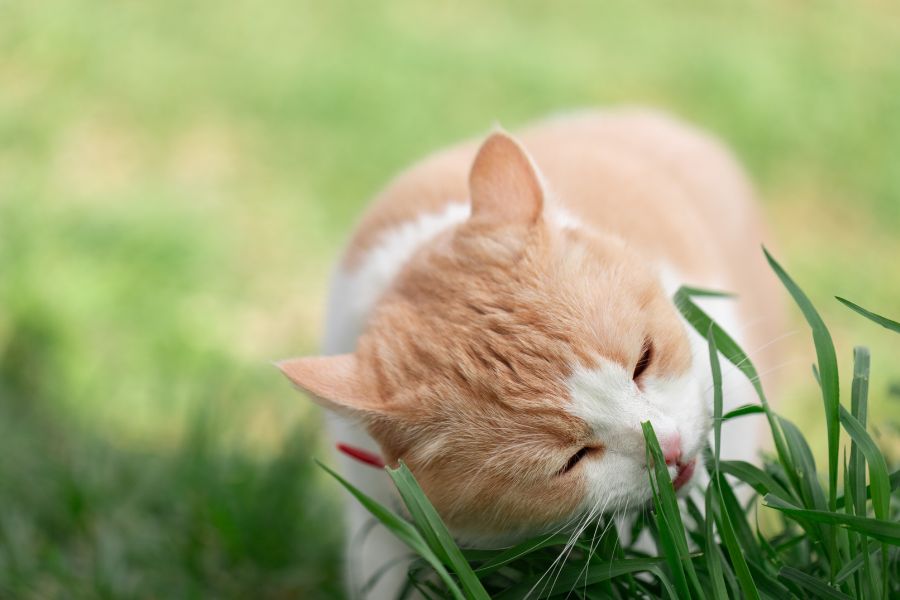
Many pet owners worry when they see their cats eat grass, especially if it leads to vomiting. Is it normal behavior, or a sign of something serious? In this guide, we explain why cats eat grass, when a cat eats grass, when vomiting becomes a warning, and whether cat grass is safe for indoor pets. We will also outline six warning signs that require immediate veterinary attention.
If your cat regularly chews on grass, this article will help you understand what is normal and what is not.
Why Do Cats Eat Grass?
It may seem strange since cats are obligate carnivores, but this behavior is surprisingly common. Studies suggest that up to 70 percent of cats eat plant material occasionally.
Here are the most common reasons cats eat grass:
1. Natural Instinct
Wild cats often consume plant material indirectly when eating prey. Grass may help stimulate digestion and mimic ancestral feeding patterns.
2. To Induce Vomiting
If your cat eats grass, vomiting follows shortly after; this may be intentional. Grass blades can tickle the throat and stomach lining, triggering vomiting. This helps remove:
- Hairballs
- Indigestible material
- Parasites
3. Digestive Support
Grass contains fiber. Fiber can support bowel movements and relieve mild constipation.
4. Nutrient Supplementation
Some experts believe cats may seek grass for trace nutrients like folic acid, which plays a role in oxygen transport in the blood.
Is Cat Grass Safe for Indoor Cats?
Yes, cat grass is safe when grown specifically for pets. Commercial cat grass usually includes:
- Wheatgrass
- Oat grass
- Barley grass
- Rye grass
However, safety depends on the source. Outdoor grass may contain:
- Pesticides
- Fertilizers
- Herbicides
- Parasites
If you are wondering, is cat grass safe? The answer is yes when it is organic and grown indoors without chemicals.
When Is It Normal for Cats to Eat Grass?
Occasional grass eating without other symptoms is usually harmless.
Normal behavior includes:
- Eating grass once in a while
- Vomiting once and acting normal afterward
- Maintaining appetite and energy
- Having regular bowel movements
In these cases, you typically do not need to stop your cat from eating grass, unless the grass source is unsafe.
Cat Eats Grass Vomiting: When Should You Worry?
Vomiting once after grass consumption is common. Persistent vomiting is not.
If your cat eats grass and vomits frequently, it may indicate:
- Gastrointestinal inflammation
- Food intolerance
- Parasites
- Pancreatitis
- Inflammatory bowel disease
Occasional vomiting is different from repeated episodes. Frequency and accompanying symptoms matter.
Check for These 6 Warning Signs Immediately
If your cats eat grass and show any of the following signs, contact your veterinarian right away.
1. Frequent Vomiting
Vomiting more than once per week after eating grass is abnormal. Repeated vomiting can cause dehydration and electrolyte imbalance.
2. Lethargy
If your cat becomes unusually tired, hides more than usual, or avoids interaction, this could signal systemic illness.
3. Loss of Appetite
A healthy cat should not skip multiple meals. Appetite changes alongside grass eating may indicate gastrointestinal distress.
4. Diarrhea or Constipation
Changes in stool consistency suggest digestive upset. Chronic diarrhea or straining requires medical evaluation.
5. Weight Loss
Unexplained weight loss may point to metabolic disease, parasites, or chronic intestinal conditions.
6. Signs of Toxin Exposure
If your cat eats outdoor grass and shows:
- Drooling
- Tremors
- Seizures
- Collapse
This could indicate pesticide poisoning and is a medical emergency.
Should You Stop Cat Eating Grass?
Many owners ask whether they should stop cat eating grass altogether.
In most cases, no. Grass eating is a natural feline behavior. However, you should intervene if:
- The grass is chemically treated
- Vomiting becomes frequent
- Your cat eats large amounts obsessively
- It leads to choking
Instead of stopping the behavior entirely, offer safe alternatives like indoor cat grass.
Healthier Alternatives to Outdoor Grass
Providing safe plant options can reduce risk.
Consider:
- Organic wheatgrass kits
- Indoor oat grass trays
- Cat-safe herb gardens
Avoid toxic plants such as lilies, aloe, and philodendron. Many houseplants are dangerous to cats.
Medical Conditions Linked to Excessive Grass Eating
If grass consumption becomes frequent or compulsive, underlying conditions may include:
Gastrointestinal Disorders
Inflammation in the stomach or intestines can cause nausea, prompting grass eating.
Parasites
Intestinal worms may cause abdominal discomfort and increased plant consumption.
Dietary Deficiency
Low fiber diets may increase the urge to chew grass.
Anxiety or Behavioral Issues
Stress can lead to repetitive behaviors, including plant chewing.
A physical exam, fecal testing, and possibly blood work may be recommended if symptoms persist.
How Veterinarians Evaluate the Problem
If your cat eats grass excessively, your veterinarian may:
- Perform a full physical exam
- Check hydration status
- Run blood tests
- Conduct fecal analysis
- Recommend imaging if needed
Diagnosis test depends on symptom severity and frequency.
Preventive Tips for Cat Owners
To keep your cat safe:
- Provide a balanced, high-quality feline diet
- Offer fresh water daily
- Grow safe indoor cat grass
- Schedule routine wellness exams
- Monitor vomiting patterns
Tracking how often your cat eats grass and vomits can help your veterinarian identify patterns.
Conclusion
In most cases, when cats eat grass, it is normal and harmless. Occasional vomiting is expected. However, persistent vomiting, appetite loss, lethargy, or weight loss are warning signs that require immediate attention.
If you are a cat owner in Patchogue and your cat shows any concerning symptoms, schedule an appointment at Paumanok Veterinary Hospital for a comprehensive evaluation. Early intervention can prevent serious complications and keep your feline companion healthy.
FAQs
1. Why does my cat eat grass and then throw up?
Cats often eat grass to trigger vomiting and clear hairballs or stomach irritation. Occasional vomiting is normal, but frequent episodes require veterinary evaluation.
2. Is cat grass safe for kittens?
Yes, cat grass is safe for kittens when grown without pesticides. Always supervise young pets to prevent overconsumption.
3. How often is too often for a cat to eat grass?
Eating grass occasionally is normal. Daily grass eating combined with vomiting or lethargy may indicate a medical issue.
4. Should I stop my cat from eating grass outside?
Yes, if the grass may be treated with chemicals or contaminated. Indoor organic cat grass is a safer alternative.
5. Can eating grass mean my cat has worms?
Possibly. Parasites can cause digestive discomfort, which may lead to increased grass eating. A fecal exam can confirm the diagnosis.